
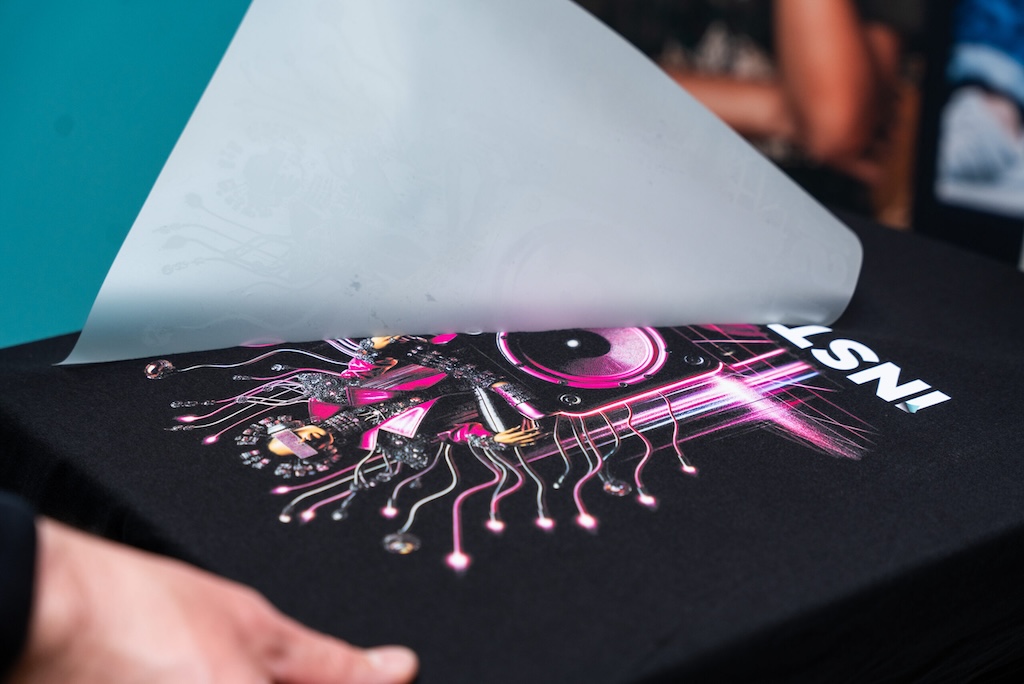
Custom heat transfers are a popular method for applying custom designs to apparel and products. Businesses and creators use custom heat transfers for apparel, promotional products and specialty printing applications. From t-shirts and tote bags to promotional items and specialty materials, heat transfer methods make for a quick and easy way to create durable and custom results. For beginners looking to create personalized products from small to large runs, understanding the different custom heat transfer types is the first step.
This guide explains the basics of custom heat transfers, the different transfer methods and the equipment you’ll need to get started.
What are Custom Heat Transfers?
Custom heat transfers involve using controlled heat and pressure to apply a design to a substrate, such as fabric or other compatible materials. A heat press machine applies the heat and pressure to bond the transfer to the surface and create a finished product that will withstand regular use.
Heat transfers are used because they offer flexibility for short or long runs, custom designs and personalized projects. Depending on the transfer method used, results can vary in appearance, durability and material compatibility.
Why Custom Heat Transfers are Popular
Custom heat transfers are used in many applications because they offer several benefits.
One is durability. When applied correctly many heat transfers are designed to withstand repeated wear and washing and still look great over time.
Customization is another. Heat transfers allow you to create personalized designs for apparel, accessories, promotional products and specialty items. Whether it’s one, single item or a long run, transfer methods offer flexibility for unique projects.
Versatility is also a big plus. Different transfer methods can be used on different materials, cotton, polyester, performance fabrics and coated hard goods depending on the transfer type.
Common Heat Transfer Types
Understanding the differences between transfer types will help beginners choose the right method for their project.
Vinyl Transfers
Heat transfer vinyl (HTV) is slowly disappearing as more modern, efficient techniques like DTF take over. Vinyl is cut into shapes, lettering or simple graphics using a vinyl cutter and then applied with a heat press.
Vinyl transfers are used for names, numbers, logos and simple designs on garments and other fabric based products. Because vinyl comes in many finishes and colors it can be used for many creative applications.
One of the strengths of vinyl transfers is durability and customization, especially for small runs. But vinyl may not be the best for detailed artwork or full color photographic designs.
Sublimation Transfers
Sublimation transfers involve printing a design onto sublimation paper and then transferring it using heat. During the process the ink turns into gas and bonds with the fibers or coating of the material.
Sublimation is used for full color, high detail graphics and photographic images. It’s great for light colored polyester garments and specially coated products such as mugs, signs and hard surfaces designed for sublimation.
Because the image becomes embedded into the material rather than sitting on top of it, sublimation designs are known for long lasting color and minimal fading. But sublimation is limited to compatible substrates and generally works best on polyester based materials.
Screen Printed Transfers
Screen printed transfers are created by screen printing a design onto transfer film or paper using various types of ink (water-based, silicone, plastisol, etc), adding layers of dye-blocker and adhesive as needed, curing it, and then applying it with a heat press.
This method is often chosen by high-end brands because of the bright, vibrant color output and the amazing durability. Screen printed transfers can work on a wide range of fabric types and are used for apparel decoration.
For many businesses, ordering custom screen printed transfers from a provider like Insta Graphic Systems is the most efficient way to go.
DTF Transfers
DTF transfers are created by digitally printing a design onto transfer film with an ink jet, adding powdered adhesive, curing it, and then applying it with a heat press.
This method is gaining traction in recent years because it allows for full-color images to be printed quickly and at a low cost. The durability and hand feel of DTF is improving extremely quickly, but it still doesn’t quite match that of screen printed transfers. This will likely change as the technology improves.
For many operators, ordering custom DTF transfers from Insta Graphic Systems is one of the most efficient ways to get started.

Equipment Needed for Heat Transfers
To get started with heat transfers you’ll need several pieces of equipment.
Manual Heat Press
For beginners, a manual heat press is often the best place to start. These machines provide controlled temperature, pressure and timing to help achieve consistent transfer results.
Insta Graphic Systems manufactures manual heat press machines for entry level and experienced users. Temperature control and consistent pressure are key to professional looking results.
Vinyl Cutter
If you plan to do vinyl transfers you’ll need a vinyl cutter. This machine cuts designs into heat transfer vinyl so you can apply them to garments or other compatible surfaces.
Sublimation Printer
Sublimation projects require a sublimation printer that prints transfer ready images using sublimation ink and paper.
DTF Printer
DTF projects require a DTF printer that prints transfer ready images using ink jet, film, and powdered adhesive. Alternatively, custom DTF transfers can be ordered from a provider like Insta Graphic Systems.
Protective Cover Sheets
Protective sheets, such as Teflon sheets or parchment paper, are used during pressing to protect equipment and materials during the transfer process.
Custom Heat Transfer Basics
While the process varies by transfer type, beginners can generally follow these steps.
First, design using graphic software or transfer specific equipment. Vinyl designs are typically mirrored before cutting to ensure proper orientation after pressing.
Next, prepare and position the transfer on the substrate. Alignment is key to prevent off-center or uneven results.
Before pressing, adjust machine settings according to the transfer material and substrate requirements. Temperature, pressure and time will vary by material.
After pressing, let cool—or peel according to transfer instructions—before inspecting the finished application.
Common Mistakes Beginners Make
Beginners encounter a learning curve with heat press equipment.
Incorrect temperature or pressure settings can affect adhesion and finish. Follow transfer instructions carefully to avoid these issues.
Poor alignment is another common mistake. Take extra time to position the transfer correctly before pressing to get better results.
Applying too much heat can damage materials or affect the finish. Test settings on sample materials before producing final products to reduce costly mistakes.
Heat Press Maintenance
Regular maintenance helps equipment perform consistently over time.
Clean the heat press regularly to remove adhesive residue or debris that can affect performance. Check equipment for wear and follow manufacturer maintenance recommendations to extend the life of the machine.
Understanding the differences between transfer methods helps beginners make informed decisions. Whether apparel, gifts or custom products, choosing the right transfer and equipment will improve consistency and results.
With over 65 years of manufacturing experience in the print and heat transfer industry, Insta Graphic Systems builds heat press equipment for durability and performance. For beginners getting started with heat transfers, learning the basics will give you a solid foundation for future projects.